
Your home's electrical system is easy to ignore until something stops working, and then it's all you can think about. At Pathway Electric, we offer residential electrical services in Tucson, AZ, and the surrounding areas, helping homeowners fix what's broken, add what's missing, and make their homes safer along the way. Whether it's a single dead outlet or a whole-house project, you'll get honest answers, quality work, and fair pricing.
Pathway Electric is a licensed electrician based in Tucson, AZ, providing residential electrical services to homeowners throughout the greater Tucson area. Owner Caleb Salisbury brings eight years of experience in the electrical trade, and our company holds an Arizona CR-11 contractor classification. Our residential work includes electrical troubleshooting and repairs, outlet and switch installation, ceiling fan and smoke detector installation, home electrical inspections, electrical safety upgrades, general electrical maintenance, and more.
Home electrical trouble rarely starts with anything dramatic. A breaker trips when your microwave and coffee maker run at the same time, a bathroom outlet goes dead, or the lights dim whenever the vacuum kicks on. Those little hiccups often mean something in the system needs attention.
Many of these problems stem from overloaded circuits, especially in older homes with fewer outlets. Connections also loosen as wires heat up and cool down under load, and months of nonstop AC use during Tucson summers add extra strain. Push-in outlet connections are a common weak spot, and some homes built between the mid-1960s and mid-1970s have aluminum wiring that needs special connectors to stay safe.
A licensed residential electrician typically tracks down the root cause by checking the panel for heat damage and loose or double-tapped breakers (two wires under a screw meant for one), then testing the affected circuits and devices. The fix might mean repairing loose connections, replacing worn outlets and switches, moving heavy appliances to dedicated circuits, or adding ground fault circuit interrupter (GFCI) and arc fault circuit interrupter (AFCI) protection where code calls for it. When the whole house is short on capacity, a service upgrade is often the better long-term answer, and bigger jobs like that typically need a permit and inspection.
After an electrician fixes the real problem, the breakers stop tripping and the outlets work as they should. Your home also leaves room for whatever you add next, from a new appliance to a backyard hot tub.
As a residential electrical contractor serving the Tucson area, we handle a wide range of home electrical work, and here's what each service involves.

When several outlets quit at once, the culprit might be a worn-out breaker, a tripped GFCI outlet in another room, or a loose connection at the first outlet on the circuit. We test our way to the actual cause, whether that means replacing breakers or repairing burnt outlets, and we'll explain what went wrong in terms that make sense.
A typical inspection examines your panel, breakers, wiring, outlets, and safety devices for issues such as overloaded circuits, scorch marks, missing GFCI protection, and amateur wiring left behind by a previous owner. It's a smart step after buying an older home or before starting a big project.
Many older homes lack protections required by today's electrical code. Common upgrades include GFCI outlets near water, AFCI breakers that help reduce the risk of arcing-related mishaps, and updates to old ungrounded outlets. Swapping a two-prong outlet for a three-prong one without a ground wire isn't safe. The proper solution is either to add a ground or to install GFCI protection, depending on the wiring.
Safety experts recommend replacing smoke detectors about every 10 years, and many homeowners don’t realize theirs are past that point. We install new detectors, including hardwired, interconnected models that all sound at once when one detects smoke and keep working even if the backup battery runs low.
Extension cords and power strips aren't meant to be permanent fixes, and leaning on them long-term can overheat wiring. From standard and USB outlets to dimmers, we install and replace devices inside and out, including weatherproof outdoor outlets under eaves and in carports with the GFCI protection and covers they require.
A ceiling fan needs a fan-rated electrical box, since a standard light fixture box can't handle the weight and motion. We'll make sure your fan is mounted securely and wired to the right switch or control, whether it's replacing a light or going in a brand-new spot. Sometimes a fan someone wrote off as defective just has a wiring or control issue, and we've turned that kind of problem around before.
Refrigerators, microwaves, washers, and garage freezers often require dedicated circuits. Running a dedicated line from the panel prevents each appliance from overloading a shared circuit, and we size the wire and breaker to match the appliance's needs.
Cooling systems need properly sized wiring, the correct breaker, and a disconnect near the outdoor unit to run safely. Mini-split equipment itself isn't something we install, but we handle the electrical side, so the system your heating, ventilation, and air conditioning (HVAC) contractor installs has the power it needs.
Most hot tubs need a 240-volt circuit with ground-fault protection, plus a disconnect that's within sight of the tub and at least 5 feet away from it. Saunas have their own specific power requirements, and we wire both to the manufacturer's specs and local code. When it's time to remove one, we'll safely disconnect and terminate the circuit, a step many homeowners don't think about until there's a loose wire in the backyard.
Adding large electrical loads to a home with 100-amp service can push the system beyond its limits. We handle service upgrades from 100 to 200 amps and from 200 to 400 amps, so your home has the capacity for today's appliances and whatever comes next. Plan on being without power for part of the day, since the utility company has to disconnect and reconnect service at the meter.
Maintenance is the part of residential electrical service that's easiest to put off. Tightening loose connections and checking your panel for wear can head off bigger problems, and pressing the test and reset buttons on your GFCI outlets once a month is an easy way to make sure they still work.
Running a business means you've got enough on your plate without having to worry about the wiring. Our commercial electrical services cover small commercial properties, including panel upgrades and electrical work for remodels and build-outs. If something goes wrong after hours, give us a call, and we'll do our best to help.
Small warning signs, like a light that dims when the microwave runs or an outlet that sparks when you plug something in, usually point to a bigger problem behind the wall. Our electrical repairs and service calls cover GFCI replacements, circuit diagnostics, and electrical inspections that get to the root of the issue.
Going from 100 to 200 amps, or from 200 to 400, gives your house room to breathe. At Pathway Electric, we handle electric panel upgrades and service upgrades for homes that keep adding big loads like hot tubs, saunas, and electric vehicle (EV) chargers. We'll remove the outdated panel, install a new Square D or Siemens unit, and ensure the entire setup complies with code.
Getting ready for the next outage beats scrambling during one. Our generator installation service matches your home with the right-sized Generac whole-home or standby unit, then connects it to an automatic transfer switch.
Just brought home a Tesla, or thinking about going electric? We handle EV charger installation for Tesla, ChargePoint, Wallbox, and other brands, both inside your garage and on an exterior wall. If your panel needs more room for the charger, we can handle that upgrade, too.
Electrical work on a new build happens in stages, starting with rough-in wiring while the walls are open and finishing with fixtures and final connections. With our new construction electrical services, we install panels, garage wiring, lighting, outlets, switches, and smoke detectors for houses, multifamily units, and commercial buildings.
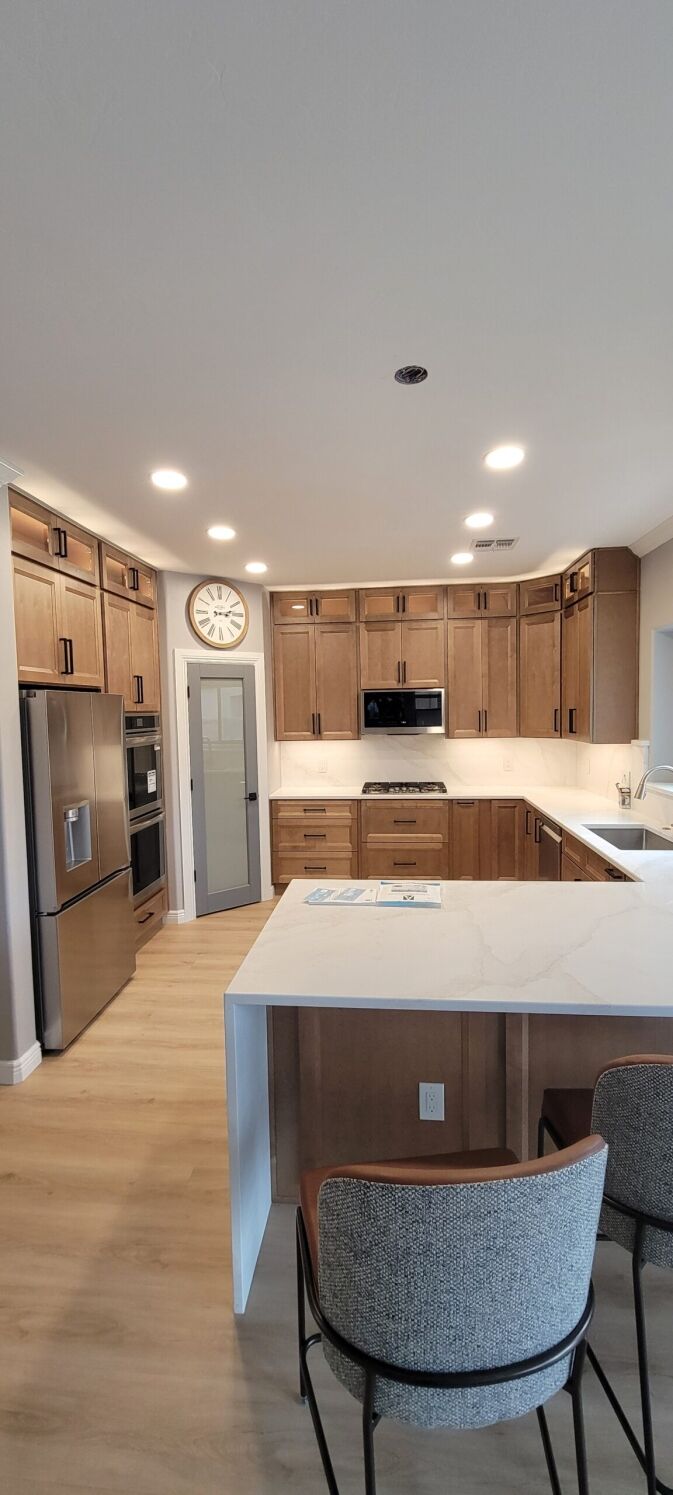
Moving a kitchen island or turning a spare room into an office almost always means rethinking the wiring. That's where our electrical remodeling and additions come in, from relocated switches and new ceiling fans to bathroom upgrades and sauna wiring. We'll help you plan where everything goes so the finished space works the way you want it to.
We want homeowners to know what to expect from our work, from the qualifications behind it to the products and protections that support each project.
Arizona's CR-11 classification covers both residential and commercial electrical work, and we're proud to carry it.
If you're a veteran, you'll get 10% off our work as our way of thanking you for your service.
For generators, Generac is our go-to, while Square D and Siemens are our picks for electrical panels and circuit breakers.
We stand behind our workmanship and labor with a two-year warranty, in line with Arizona requirements, and honor all applicable manufacturer warranties, though terms may vary depending on the work and products involved.
A straightforward dedicated circuit often takes a few hours, though the timeline depends on how far the new line runs from the panel and whether the panel has open space for another breaker. Running wire through a hot Tucson attic or adding a subpanel tends to stretch the job, and a residential electrical contractor can give you a realistic timeline after checking your panel and the wire's route. Keep in mind that new circuits usually need a permit and inspection, which can add time before the project wraps up.
Replacing it is usually the better call, since worn outlets and switches don't hold up once their internal contacts start to fail. If you notice plugs that slip out easily, cracked faceplates, scorch marks, or a switch that feels hot, it's time for a new device. In older Tucson homes, a replacement is also a good chance to add GFCI protection near water or upgrade to tamper-resistant outlets.
Start by checking your breaker panel for a tripped breaker, and press the reset button on any GFCI outlets in kitchens, bathrooms, garages, and outdoor areas. If a breaker trips again right away or you smell something burning, leave it off and call an electrician, as that indicates a short or an overloaded circuit. A large section of the house going out while big appliances like the AC or dryer act strangely can signal a lost connection on the utility's side, so call Tucson Electric Power or your local utility right away.
Fall, winter, and spring are usually the easiest times for big projects like panel upgrades, new circuits, and attic wiring, since you won't lose AC during triple-digit heat, and attics are much safer to work in. Scheduling residential electrical service before summer also helps catch loose connections ahead of months of heavy AC use and monsoon storms. Urgent problems like sparking outlets or a dead circuit shouldn't wait for the right season, though.
Call a licensed residential electrician, since most hot tubs and many saunas require a dedicated 240-volt circuit, ground fault protection, and a properly located disconnect. The job typically requires a permit in Tucson-area jurisdictions, and the electrician should follow the manufacturer's specs for wire size and breaker rating. If you're removing an old spa, the same electrician can safely disconnect and terminate the circuit, so no energized wire ends up sitting in the yard.
FAQs reviewed by Caleb Salisbury, owner of Pathway Electric, a licensed and local electrician serving Tucson, AZ, and beyond.
From a dead outlet to a whole-home safety checkup, we're here to keep your home running smoothly.
Business Name: Pathway Electric
Address: Tucson, AZ, 85743
Phone: 520-780-8711
Business Hours:
Mon - Fri: 8:00 AM to 5:00 PM
Sat-Sun: Closed
Emergency Service Available
We honor those who serve. Veterans save 10%.
We honor all applicable manufacturer warranties and stand behind our workmanship and labor with a two-year warranty, in accordance with state requirements. Warranty terms and conditions may vary depending on the work performed and products installed.
